Brussels Cabbage Recipe Guide: Turning a Humble Vegetable into a Star Dish
A well-made brussels cabbage recipe has the power to completely change how people think about this vegetable. Long associated with bland or overcooked side dishes, Brussels cabbage—more commonly known as Brussels sprouts—has quietly become one of the most versatile and flavorful vegetables in modern cooking. When prepared thoughtfully, it delivers crisp texture, deep savory notes, and a natural sweetness that surprises even skeptics.
This guide explores how to build a truly satisfying brussels cabbage recipe from the ground up. You’ll learn why certain cooking methods work better than others, how to balance bitterness, how to bring out caramelization, and how to adapt recipes to different cuisines and occasions. Rather than offering just one method, this article gives you a framework for creating brussels cabbage recipes that are reliable, flexible, and memorable.
Understanding Brussels Cabbage and Its Flavor Profile
A successful brussels cabbage recipe begins with understanding the vegetable itself. Brussels cabbage belongs to the same family as cabbage, broccoli, and kale, which explains its slightly bitter edge and earthy depth.
That bitterness is not a flaw. It is a feature that becomes an asset when paired with the right cooking technique and seasoning. High heat, fat, and salt help mellow bitterness and highlight natural sugars. Acid and umami balance the flavor, creating complexity rather than harshness.
When people say they dislike Brussels cabbage, they usually mean they have only experienced it overcooked and underseasoned. A good brussels cabbage recipe avoids both mistakes.
Choosing the Best Brussels Cabbage for Cooking
Freshness matters greatly in any brussels cabbage recipe. Smaller to medium-sized heads tend to be sweeter and more tender than very large ones. They should feel firm, compact, and vibrant green, with tightly closed leaves.
Avoid Brussels cabbage that appears yellowed, soft, or strongly scented. Older sprouts become more bitter and less pleasant in texture.
Uniform size is also important. Evenly sized pieces cook at the same rate, which is critical for achieving consistent browning and tenderness in a brussels cabbage recipe.
Preparing Brussels Cabbage the Right Way
Preparation sets the stage for success. Trim the tough stem end and remove any damaged outer leaves. Washing thoroughly removes grit trapped between layers.
Cutting style influences texture and flavor. Halving or quartering exposes more surface area, which increases caramelization. Leaving Brussels cabbage whole retains moisture but requires longer cooking.
A thoughtful brussels cabbage recipe chooses the cut based on the desired result rather than convenience.
Why Cooking Method Makes or Breaks a Brussels Cabbage Recipe
The biggest difference between a disappointing dish and a crave-worthy one is cooking method. Moist heat alone often leads to sulfurous aromas and mushy texture. Dry heat or a combination of dry and moist heat produces better results.
Roasting, pan-searing, sautéing, grilling, and air-frying are all excellent choices. These methods promote browning, which unlocks sweetness and complexity.
Boiling should be used sparingly and briefly, often as a preliminary step rather than the main method, in a well-designed brussels cabbage recipe.
Roasted Brussels Cabbage: The Gold Standard
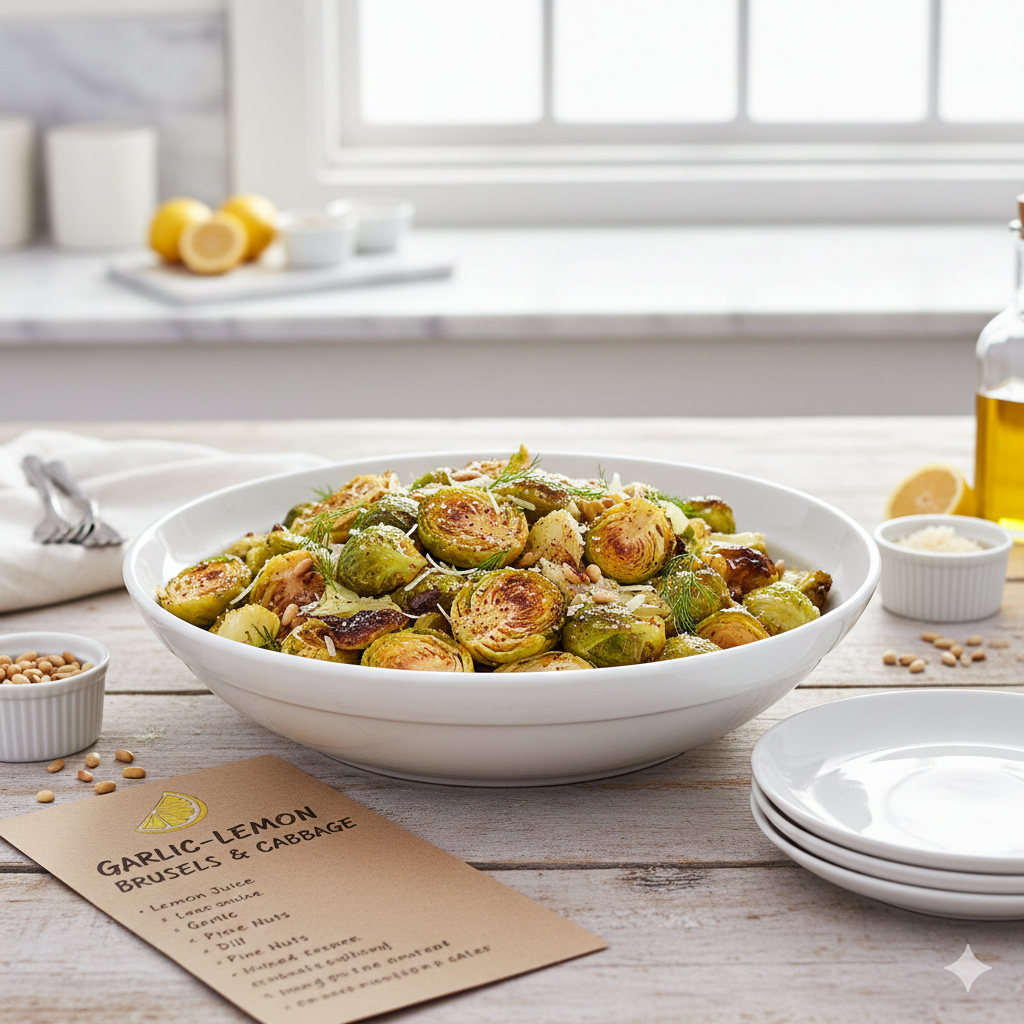
Roasting is the most popular technique for a reason. A roasted brussels cabbage recipe delivers crisp edges, tender centers, and deep flavor with minimal effort.
High heat encourages caramelization. Oil coats the surface, helping leaves blister and brown. Salt draws out moisture and enhances sweetness.
Spacing matters. Crowding the pan traps steam and prevents browning. A great brussels cabbage recipe respects airflow as much as seasoning.
Pan-Seared Brussels Cabbage for Maximum Flavor
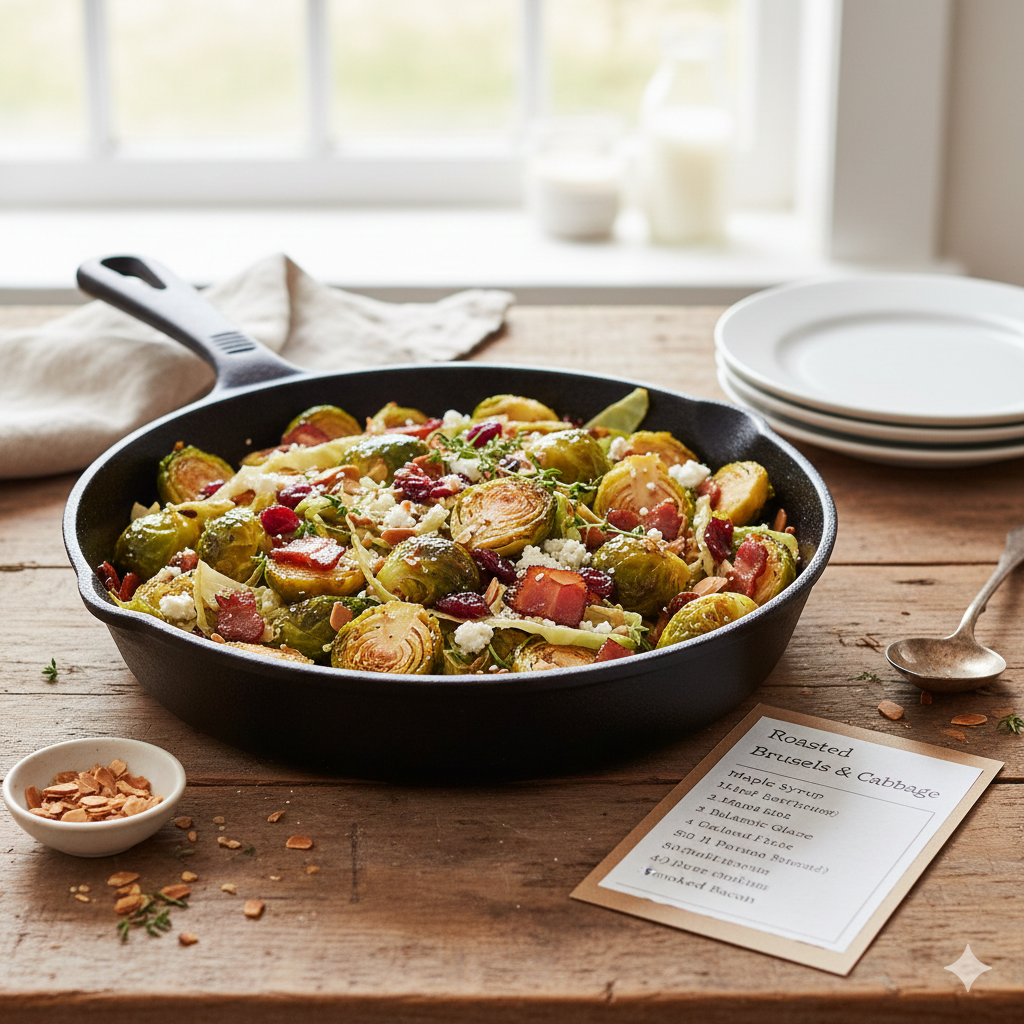
Pan-searing offers more control and faster results. A skillet allows direct contact with heat, creating golden surfaces and nutty aromas.
A pan-seared brussels cabbage recipe often starts cut-side down, allowing the flat surface to brown deeply before turning. This technique produces dramatic flavor with minimal ingredients.
Finishing with a splash of liquid or a knob of fat softens the interior without sacrificing crispness.
Balancing Bitterness in a Brussels Cabbage Recipe
Bitterness is often the biggest concern when cooking Brussels cabbage. The solution is balance, not elimination.
Fat coats bitter compounds, salt enhances sweetness, and acid brightens the final dish. Sweet elements such as caramelized onions or roasted garlic can also help.
A strong brussels cabbage recipe acknowledges bitterness and counteracts it thoughtfully rather than masking it completely.
Seasoning Strategies That Elevate Flavor
Simple seasoning often works best. Salt and pepper are essential, but additional layers make a dish memorable.
Garlic, shallots, mustard, vinegar, citrus zest, chili flakes, and herbs all complement Brussels cabbage well. The key is restraint. Too many flavors overwhelm the vegetable.
The best brussels cabbage recipe allows the vegetable to remain recognizable while enhancing its natural character.
Adding Umami Without Overpowering the Dish
Umami deepens flavor and adds satisfaction. In a brussels cabbage recipe, umami can come from mushrooms, fermented ingredients, aged cheese, or slow-cooked onions.
These elements should support rather than dominate. A subtle umami note makes the dish feel complete without turning it heavy.
Balance is what keeps a brussels cabbage recipe elegant rather than aggressive.
Creamy Brussels Cabbage Recipes Without Heaviness
Creamy dishes can feel luxurious, but they require care. Too much cream dulls flavor and texture.
A smart brussels cabbage recipe uses cream sparingly, often combined with acidity or sharp elements. Yogurt, light cream sauces, or blended vegetables can create creaminess without excess fat.
This approach keeps the dish satisfying yet balanced.
Brussels Cabbage in Global-Inspired Recipes
Brussels cabbage adapts well to global flavors. Its sturdy texture and bold flavor allow it to absorb spices and sauces effectively.
Spice-forward approaches, tangy marinades, and aromatic seasonings all work when applied with care. The vegetable becomes a canvas rather than a constraint.
A versatile brussels cabbage recipe can shift cuisines without losing its identity.
Vegetarian and Plant-Based Brussels Cabbage Recipes
Brussels cabbage is a natural fit for vegetarian and plant-based cooking. It provides structure, bite, and depth that many vegetables lack.
When paired with grains, legumes, or nuts, a brussels cabbage recipe becomes filling enough to stand alone. Thoughtful seasoning ensures it feels intentional rather than like a side dish.
Plant-based fats and acids are especially important for balance.
Turning Brussels Cabbage into a Main Dish
While often served as a side, Brussels cabbage can anchor a meal. Roasted and paired with complementary ingredients, it becomes substantial and satisfying.
Texture contrast is key. Crunchy toppings, creamy elements, and chewy grains prevent monotony.
A main-dish brussels cabbage recipe should feel layered and complete, not like a side that wandered into the spotlight.
Common Mistakes That Ruin a Brussels Cabbage Recipe
Overcooking is the most frequent issue. Brussels cabbage should be tender but not mushy.
Under-seasoning is another problem. Because of its natural bitterness, Brussels cabbage needs sufficient salt and fat.
Crowding the pan, using low heat, or skipping acid at the end all lead to flat results. Avoiding these mistakes dramatically improves any brussels cabbage recipe.
Making Brussels Cabbage Ahead of Time
Brussels cabbage can be prepped in advance, but final cooking should be close to serving for best texture.
Roasting partially and finishing later works well. Sauces and dressings can be prepared ahead and added at the end.
A make-ahead brussels cabbage recipe focuses on maintaining texture and freshness rather than convenience alone.
Storage and Reheating Tips
Leftover Brussels cabbage should be stored airtight and reheated gently. High heat restores crispness, while microwaving often softens texture.
Adding a small amount of oil or fat during reheating helps revive flavor.
A well-made brussels cabbage recipe can still taste good the next day if handled properly.
Seasonal Appeal of Brussels Cabbage Recipes
Brussels cabbage shines in cooler seasons, when roasting and hearty flavors feel comforting. Its natural sweetness becomes more pronounced after exposure to cold weather.
Seasonal ingredients like root vegetables, citrus, and herbs pair beautifully, enhancing the dish without overwhelming it.
A seasonal brussels cabbage recipe feels grounded and satisfying.
Why Brussels Cabbage Deserves More Attention
Brussels cabbage rewards care. It is forgiving enough for beginners yet nuanced enough for experienced cooks.
With the right technique, it transforms from misunderstood vegetable to reliable favorite. That versatility is what keeps brussels cabbage recipes relevant year after year.
Once you understand how it behaves, creativity comes naturally.
Conclusion
A thoughtful brussels cabbage recipe is built on understanding, balance, and technique. By choosing fresh ingredients, applying the right cooking method, and layering flavor intentionally, Brussels cabbage becomes something people look forward to rather than avoid.
Whether roasted, pan-seared, creamy, or spice-forward, Brussels cabbage has the range to fit many styles of cooking. With practice, it shifts from side dish to centerpiece, proving that even the most underestimated vegetables can shine when treated with care.
Frequently Asked Questions
Why does my brussels cabbage recipe taste bitter?
Bitterness usually comes from undercooking or lack of balance. Using enough fat, salt, and acid helps mellow harsh flavors.
Is it better to roast Brussels cabbage whole or cut?
Cut Brussels cabbage browns more evenly and develops more flavor. Whole pieces take longer and are better for gentler cooking methods.
Can I make a brussels cabbage recipe vegan?
Yes. Brussels cabbage works very well in vegan cooking when paired with plant-based fats, acids, and umami-rich ingredients.
How do I get crispy Brussels cabbage?
High heat, enough oil, and proper spacing are key. Crowding prevents browning and leads to steaming.
Can Brussels cabbage be the main dish?
Absolutely. When paired with grains, legumes, or sauces, a brussels cabbage recipe can be filling and satisfying.