
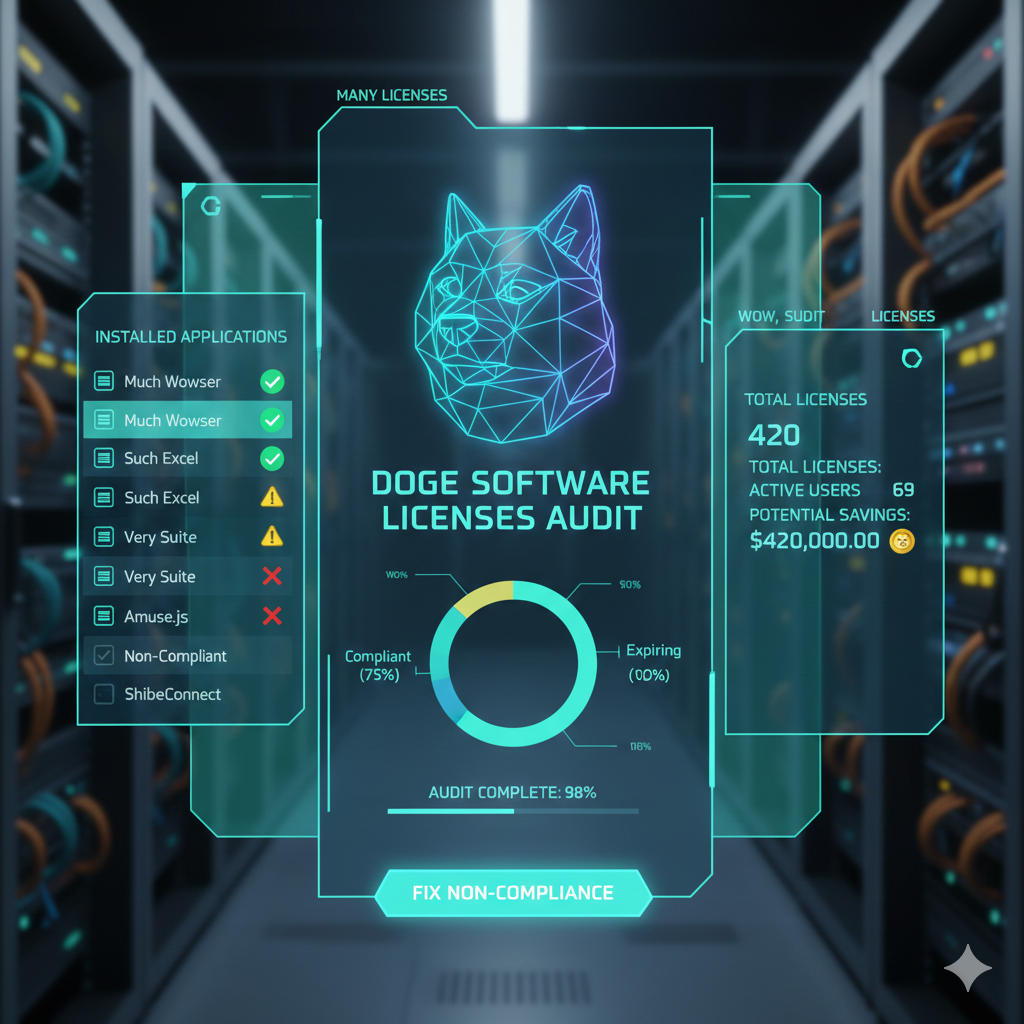
Doge Software Licenses Audit HUD: Mastering Compliance and Cost Control in the Digital Enterprise
Managing software licenses is a massive challenge for modern enterprises. The complexity of these licenses can lead to staggering financial penalties, legal risk, and enormous budgetary waste from paying for unused products. This is the context that gives rise to the term Doge Software Licenses Audit HUD. This phrase has become synonymous with both the painful inefficiency found in large organizations (often referenced in public sector audits) and the urgent need for a sophisticated, real-time solution—the License Audit HUD (Heads-Up Display).
This article will delve into the concept of the Doge software audit HUD, trace its origins through widely discussed audit findings, and provide a robust framework for organizations seeking to achieve best-in-class Doge software license compliance checker and optimization. We will explore how a license management HUD shifts compliance from a reactive task to a continuous, strategic process.
What Is a Software License Audit—The Compliance Basics
The foundation of the discussion is the core practice of the software license audit, or compliance audit. A software licensing audit is a structured, systematic review of an organization’s use of software against the legally binding terms stipulated in the vendor’s agreements. This review is critical whether initiated internally for governance or externally by a vendor (like Adobe, Microsoft, or Oracle).
The audit’s goals are crucially important for mitigating organizational risk:
- Ensure Legal Compliance: The primary objective is to verify that software usage is entirely legal, adhering to limitations on users, devices, CPUs, or usage scope. This preventative measure is essential to avoid major financial penalties and costly legal action resulting from under-licensing.
- Manage Costs and Prevent Waste: Internal audits are often geared toward identifying ‘over-licensing’—the purchase and renewal of licenses that are either unused or severely under-utilized. Addressing this waste is a massive cost-saving opportunity for any organization undergoing a Doge enterprise licensing audit.
- Maintain Audit-Ready Documentation: The audit process forces the creation of a clear, documented record of software entitlements, usage metrics, and deployment history, which is essential for streamlined future reviews.
Crucially, while traditional audits are disruptive, single snapshots in time, the goal of a robust Doge software audit platform is to provide perpetual, real-time compliance checking.
Understanding “HUD” in This Context: License Audit Heads-Up Display
The second, and perhaps most modern, component of the term is HUD—which stands for Heads-Up Display. In the realm of software asset management (SAM), the HUD is a sophisticated, centralized dashboard designed for immediate strategic oversight, transforming a complex dataset into actionable intelligence.
A Doge license management HUD is a sophisticated, centralized dashboard interface that provides high-level stakeholders (ITAM, Procurement, Finance, and Legal) with:
- Real-Time Visibility: The ability to see current license consumption and compliance status as they are happening, eliminating the lag associated with manual, periodic reporting.
- Proactive Alerts: Automated warnings when utilization approaches a critical threshold (e.g., 90% capacity), or when usage patterns suggest a violation of complex license terms (e.g., a desktop license being used in a server environment).
- Actionable Metrics: Visualization focused on key performance indicators (KPIs) like the total monetary value of reclaimable licenses or the overall compliance risk score of the entire software portfolio.
The Doge HUD interface shifts license governance from a reactive scramble—a “fire drill”—to a continuous, proactive optimization and management process. This visual approach is vital for making quick, informed decisions.
What “Doge” Means in This Term: Efficiency and Oversight
The incorporation of “Doge” into this specialized term serves a dual purpose beyond simple branding:
- The Shocking Discovery: The term often references the widespread public attention generated by audits that uncovered staggering, often multi-million dollar, levels of inefficiency and license waste in large governmental or corporate settings. It signifies the scale of the optimization challenge.
- The Efficiency Imperative: “Doge” has been associated in media with aggressive efficiency initiatives (like the ‘Department of Government Efficiency’) that leverage technology to push for radical transparency and cost-saving measures, particularly in IT expenditure.
Therefore, the full phrase Doge software license audit has come to signify an audit not merely for legal compliance, but an intensive review focused intensely on waste elimination and expenditure optimization—a comprehensive Doge enterprise licensing audit.
Case Study / Example: The (Alleged) Audit of U.S. Department of Housing and Urban Development (HUD)
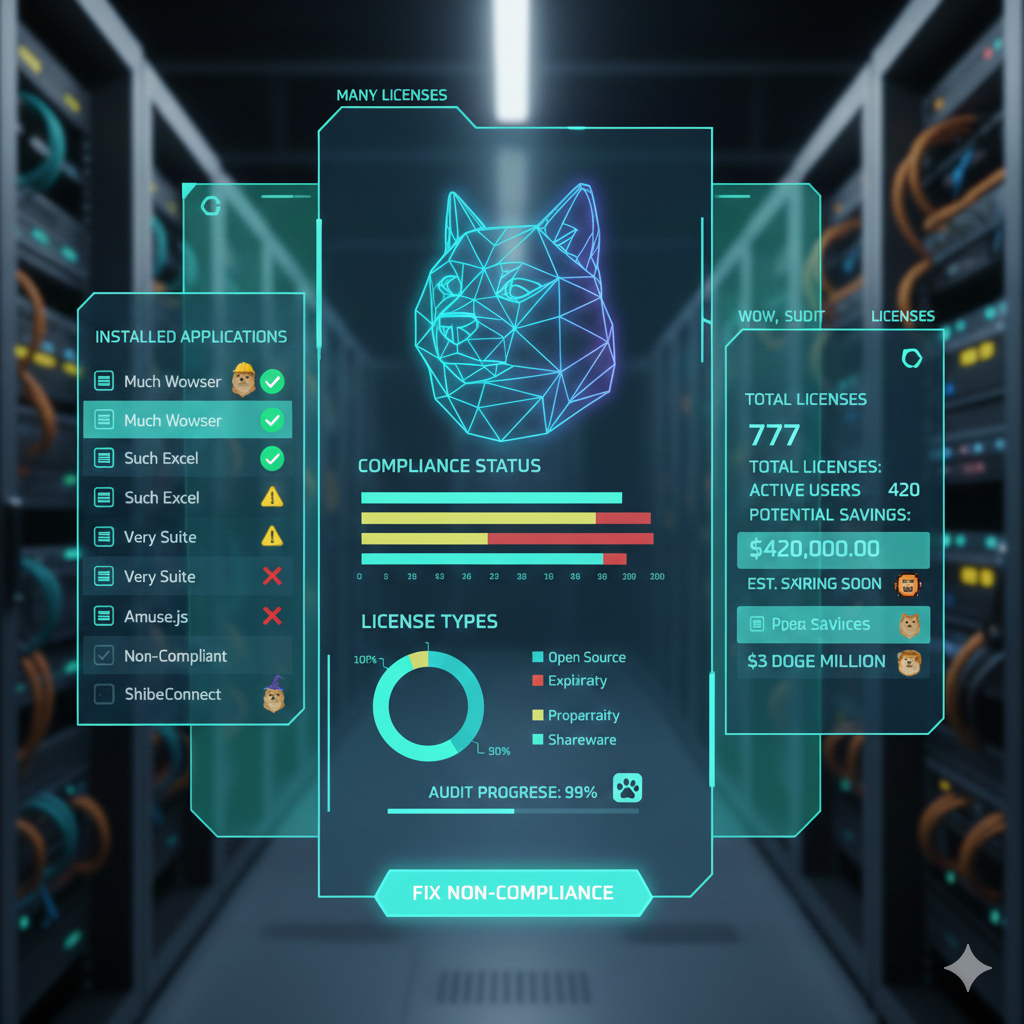
The very construction of the term—Doge Software Licenses Audit HUD—is deeply rooted in the highly publicized findings related to the U.S. Department of Housing and Urban Development (HUD) and similar federal agencies. These reports served as a powerful, public example of the problem a HUD system is designed to solve.
The Publicized Claims and Their Implications:
- Massive Unused Licenses: The most cited finding alleged a staggering volume of unused or deeply under-utilized commercial software licenses. For instance, reports claimed thousands of expensive licenses for professional tools like Adobe Acrobat had zero active users, costing millions of taxpayer dollars annually.
- Hidden Budgetary Waste: These examples showcased how poor Doge license tracking software leads to waste being hidden across multiple departmental budgets, making centralized identification and reclamation impossible through traditional means.
- Lack of Control: The core problem wasn’t malice, but a lack of modern, centralized IT asset management—a system where licenses were purchased but never reclaimed or re-assigned when employees left or switched roles.
An automated, real-time Doge HUD audit tool is the direct countermeasure. It doesn’t wait for an annual procurement review. It constantly monitors usage and triggers immediate “license harvesting” alerts for products that have been inactive for a set period (e.g., 60 days), instantly preventing the next renewal cycle’s unnecessary cost.
Key Features of an Effective License Audit HUD / Tool
To effectively tackle the complexity illustrated by the HUD case study, a modern Doge license audit solution must integrate several cutting-edge features.
1. Centralized License Inventory Tracking
The system must be the undisputed single source of truth for all software assets and entitlements.
- Discovery and Scanning: It employs a continuous Doge software license scanner to automatically find all software installed across the entire infrastructure—servers, desktops, virtual machines, and cloud instances.
- Entitlement Mapping: It systematically records all purchased contracts, linking them directly to the discovered installations to establish a clear audit trail and entitlement count, forming the core of the Doge software inventory audit.
2. Real-Time Usage & Compliance Monitoring
This is the heart of the “HUD” and the biggest differentiator from legacy SAM tools.
- Active vs. Inactive: The system must accurately distinguish a license that is assigned from one that is actively being used (e.g., application launched in the last month). This enables Doge license audit automation for reclaiming idle licenses.
- Risk Metering: It continuously calculates the risk of non-compliance based on usage patterns versus license terms, providing alerts before a breach occurs. This delivers true Doge software compliance monitoring.
3. License-Type Detection and Risk Assessment
Simple counts are insufficient in a world governed by varied legal contracts.
- License Classification: The system uses a sophisticated Doge license compliance tool to classify every piece of software by its license type (e.g., Proprietary EULA, Subscription, MIT, GPL).
- Dependency Scanning: It tracks the ‘software supply chain,’ flagging third-party or open-source components embedded within applications to ensure their licenses (especially restrictive ‘copyleft’ licenses) are not violated.
4. Automated Reporting and Audit-Ready Logs
Reducing the human effort during an audit is a core value proposition.
- Vendor-Specific Reports: The tool must generate reports tailored to meet the specific requirements of major vendor audits (e.g., Oracle Core factor reports, Microsoft Effective License Position). These Doge audit reporting features drastically cut preparation time.
- Immutable Trails: Maintaining a tamper-proof record of every installation, de-installation, and policy change provides the necessary documentation for any official review, all detailed within the Doge audit tool documentation.
5. Optimization and Integration
The HUD must integrate with procurement and financial processes to prevent waste before it happens.
- Reclamation Engine: Automatically identifying and de-provisioning licenses from inactive users, feeding them back into the pool for future reassignment—achieving true Doge software license optimization.
- Procurement Gate: Automatically checking the available license pool before allowing the purchase of new software, thereby preventing redundant spending.
Benefits of Using a License Audit HUD Approach
Adopting a HUD-style strategy for license governance transforms the organization’s relationship with its software stack, yielding powerful, measurable benefits.
| Benefit Category | Traditional Auditing (Manual/Periodic) | HUD-Style Auditing (Real-Time/Continuous) |
| Cost Savings | Retrospective—identifies waste after it has accumulated for years. | Proactive—identifies unused licenses in days, enabling immediate reclamation and preventing the next renewal cost. |
| Legal Safety | Reactive—identifies a violation after the organization is already exposed to risk/fines. | Preventative—provides alerts when usage nears capacity, enforcing compliance before a breach. |
| Transparency | Low—data is often siloed, making executive oversight difficult. | High—provides a central Doge software compliance dashboard with clear, uniform risk scoring for all stakeholders. |
| Efficiency | High manual effort, time-consuming, and stressful. | Low manual effort due to Doge license audit automation, freeing ITAM teams for strategic work. |
Cost Savings: By providing precise, real-time usage data, a Doge software usage audit can uncover millions in potential savings for large enterprises by preventing the automatic renewal of contracts tied to inactive users. This is where a focused Doge commercial license audit provides the highest ROI.
Legal and Compliance Safety: The continuous monitoring acts as a real-time Doge license verification software, drastically reducing the likelihood of a major vendor audit finding costly non-compliance gaps.
Operational Efficiency: The automation simplifies governance, replacing labor-intensive data gathering with automated reports, allowing IT staff to focus on strategic technology deployment rather than paperwork.
Challenges and Risks
Implementing a full-scale Doge license monitoring system is complex, particularly in organizations burdened by technical debt and legacy structures.
Complexity of License Types
The sheer variety of modern licensing metrics makes accurate modeling difficult:
- Modeling Rules: The HUD must accurately model concurrent-user licenses, per-core metrics (common for Oracle/IBM), tiered usage (common in SaaS), and complex virtualization rules simultaneously. An error in modeling even one type can lead to a compliance failure.
- Open-Source Risk: The legal terms of open-source licenses introduce non-financial risks (like the obligation to publish source code under copyleft terms) that must be tracked by the Doge software license analyzer.
Organizational Inertia
Technology is often limited by human factors and internal processes:
- Decentralized Procurement: If different departments buy software independently, the central ITAM team and the HUD will lack a complete and accurate entitlement record, creating a blind spot in the Doge audit dashboard.
- Legacy Systems: Many organizations still operate on antiquated contracts or infrastructure that do not easily integrate with modern, real-time SAM tools, forcing complex manual reconciliation that undermines the HUD’s benefits.
How Organizations (Public or Private) Can Implement a License Audit HUD Strategy
The move toward a HUD-driven, continuous compliance model requires a commitment across technology, legal, and financial teams.
- Conduct Initial License Inventory: Start with a comprehensive baseline audit. Use a Doge software license scanner to map all installed software and reconcile this against all procurement records to establish the initial entitlement vs. usage baseline.
- Deploy the Audit Dashboard/HUD: Select or develop a platform that provides the core features of a Doge audit dashboard—real-time alerts, cross-platform visibility, and a strong policy engine. The system must support the automated tracking required for continuous Doge software compliance monitoring.
- Set License Policy Standards: Establish clear, non-negotiable standards for software use. This includes defining license harvesting rules (e.g., reclaim after 90 days of inactivity) and setting clear internal rules regarding the use of open-source and proprietary software.
- Integrate and Automate Governance: Integrate the HUD with procurement, HR (for tracking employee departures/onboarding), and IT helpdesks. Doge license audit automation must be built into the regular processes, ensuring that license governance is continuous, not just a one-off project.
- Establish Clear Accountability: Assign clear ownership for the SAM process. IT Asset Management, Finance, and Legal must regularly review the HUD’s reports and be empowered to enforce license policies across all departments, ensuring the sustainability of the cost-saving efforts.
Conclusion & Key Takeaways
The term Doge Software Licenses Audit HUD highlights the critical need to eliminate the costly waste and legal risk associated with poor license management. Manual, periodic audits are insufficient for the scale and complexity of modern enterprise IT.
The solution lies in implementing a Doge software license analyzer—a real-time Heads-Up Display that enables continuous monitoring and optimization. By adopting this HUD approach, organizations can achieve perpetual compliance, automatically reclaim unused software, and realize strategic cost savings. The goal is to shift from reactive cleanup to proactive, automated governance, ensuring that every license dollar is spent efficiently.
Frequently Asked Questions (FAQs)
Q1. What is the primary difference between a traditional audit and a Doge license monitoring system?
Traditional audits are manual, periodic snapshots. A Doge license monitoring system is a continuous, real-time platform using a Doge audit dashboard to proactively prevent waste and compliance issues.
Q2. How does a Doge HUD audit tool achieve cost savings?
The Doge HUD audit tool provides Doge software license optimization by tracking actual usage. It automatically identifies and reclaims licenses from inactive users, preventing the unnecessary purchase of new software.
Q3. Is the “Doge” concept only relevant to government or public sector audits?
No. The need for a sophisticated Doge license management HUD applies to all large private enterprises facing complex licensing, decentralized procurement, and significant risk of license waste.
Q4. What specific compliance risk does a Doge software license analyzer help mitigate?
It mitigates legal risk, especially from open-source compliance. The Doge software license analyzer scans for restrictive copyleft licenses (like GPL) to prevent their use in ways that could compromise proprietary code.
Q5. What is the most critical feature to look for in a Doge license tracking software?
The most critical feature is real-time usage metering. The best Doge license tracking software must measure active usage (who is using the software and how often) to ensure true compliance and support intelligent reclamation.